The letter will say, item by item; read it as a list, not a verdict. On a house extension or loft, an invalid notice usually comes down to one of five things: the location plan, drawings without a usable scale or dimensions, the ownership certificate, the fee, or a document on the council's local list. Nothing about the design has been judged yet, because an invalid application has not started its eight-week clock. Supply what is properly required and the clock starts; if the council is asking for something it should not, the article 12 route makes it answer formally. If the forms, plans or statements need redoing, our application pack is £295.
On this page
What makes an application valid in the first place?
Four things together: a completed form, the national information requirements, the correct fee, and anything on the council's local list (MHCLG, Making an application, paragraph 016). The guidance adds that an application is not valid, and cannot be decided, unless the right ownership certificate is completed (paragraph 025).
That is a short test, but every London borough fills in the detail differently through its local list, and that is where most sets fail.
Which drawings do London councils most often bounce?
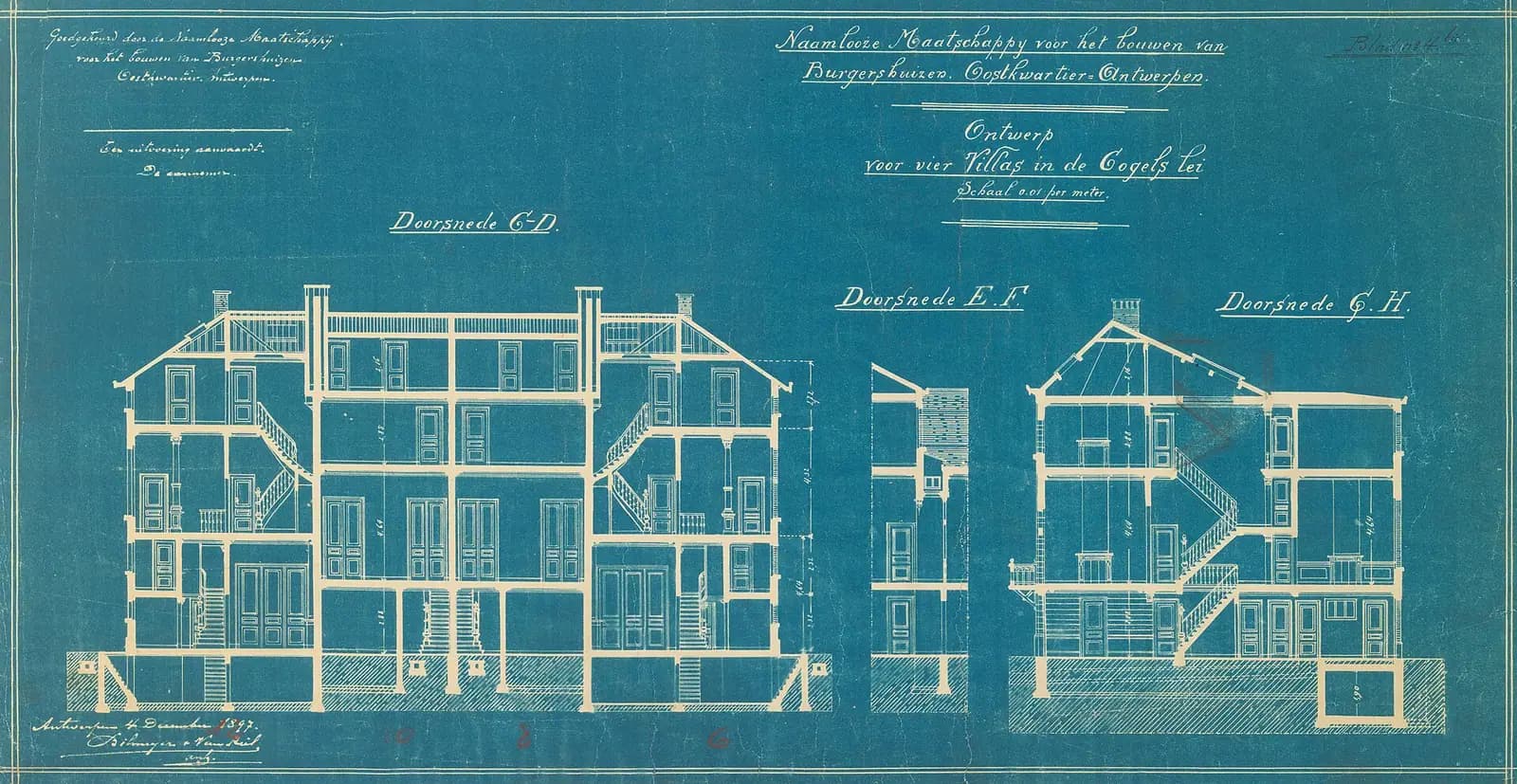
Southwark published a plain list of the reasons applications were made invalid, in a 2016 committee paper that is still a fair summary of what validation officers look for. On drawings it named missing location plans or ones "not adequately identifying a site edged red", existing and proposed plans not showing the site and scheme accurately, and drawings "without a scale bar, without a written scale (e.g. 1:100), without clearly annotated dimensions and/or displaying a do not scale note" (Southwark Council).
Haringey's August 2024 list shows how specific a borough can be. It asks for a scale bar on everything and at least one significant dimension on proposed plans and elevations, a block plan of at least 1:500 showing the properties either side and to the rear with a north point, floor plans showing the neighbour at the same level, and a full set of existing drawings alongside the proposed (Haringey Local Validation List).

On a London extension or loft, the drawing problems behind invalid letters usually fall into a few groups:
- Location plan: an estate agent's map, a red line that stops short of the road, no north point, or an out-of-date base map.
- Scale: PDFs exported "fit to page", so the stated 1:100 is no longer true, or a "do not scale" note copied from a builder's drawing.
- Missing existing drawings: proposed plans submitted without the existing, so the officer cannot see what changes.
- Neighbours not shown: the borough asks for the adjoining houses on plans or elevations and they are left off.
- Inconsistency: a window on the elevation that is not on the plan, or a roof height that differs between sheets.
The non-drawing causes are just as common: the wrong ownership certificate where a neighbour owns part of the land, an unsigned or undated form, the wrong fee, or a description of development that leaves something out.
How do I fix it quickly?
Treat the letter as a checklist and answer every item in one go. Sending items piecemeal invites a second invalid letter.
- Copy the council's list of missing items into a table, one row each.
- Check each against the council's current local list. A local requirement only affects validity if it is on a list published on the council's website less than two years before you applied (MHCLG, paragraph 039). Note the list's date.
- Fix the drawings at source. Re-export at true scale with a scale bar, add the significant dimensions, put the existing and proposed side by side, and redraw the location plan on a current Ordnance Survey base.
- Send everything together with a short covering note listing each item and the document that answers it.
- Ask for the validation date. That date, not the submission date, starts the eight weeks for a householder application.
If the original drawings were prepared by someone else and the problem is the drawings themselves, our post on what planning drawings include sets out the national minimum, and new proposed drawings are £395.
What if I think the council is asking for too much?
Then use article 12 of the Development Management Procedure Order. You send the council a notice that identifies the information, explains why you think it does not meet the statutory tests, and asks it to waive the requirement. The council must reply with either a validation notice, dropping the requirement, or a non-validation notice, keeping it (DMPO 2015, article 12).
The tests are that the information is reasonable for the nature and scale of the development and is about something likely to be a material consideration. Haringey's list repeats those tests and accepts the notice on its own "Request for Waiver" form (Haringey).
On timing, the Order sets the reply deadline as the end of the normal determination period; if your notice arrives in the last 7 working days of that period, or after it, the council has 7 working days. If the council issues a non-validation notice and the application is not decided in time, you can appeal for non-determination, and the Inspectorate looks at both the validation dispute and the scheme itself (MHCLG, paragraph 053).
Use it sparingly. Asking for a heritage statement for a house in a conservation area, or a flood risk assessment in Flood Zone 3, is likely to pass the tests, and arguing costs weeks. Article 12 is for the request that genuinely does not fit the scheme.
What does it cost to put right?
If the fee was paid and the application is simply incomplete, there is usually no second council fee: you are completing the same application. Check whether the letter says the fee itself is wrong, because a shortfall must be paid before anything else.
Our application pack, at £295, covers the forms, statements, OS location plan and block plan. Where the drawings need redoing, proposed drawings are £395. For an application we drew and submitted, answering validation queries is part of our submission service.
Frequently asked questions
Does an invalid application count as a refusal? No. It has not been assessed. Nothing goes on record as a decision, and once valid it is judged on its merits like any other.
How long do I have to send the missing items? The Order does not set a deadline for you. Councils usually set one in the letter, so reply by that date or ask for more time in writing.
The council wants a document that is not on its local list. Do I have to send it? Only items on a list published less than two years before you applied can affect validity. Point to the list's date politely, and use an article 12 notice if the council insists.
Can the council ask for more information after validating the application? Yes, but the guidance says a request made after validation does not affect the application's validity.