Certificate of lawfulness · London & home counties
Lawful development certificate London, from £950
Written proof from the council that your work is lawful, drawn and submitted for you. Optional for permitted development, and we tell you honestly when you can do without it.
Half the equivalent planning fee for a proposed use certificate.
Plus the Planning Portal's own charge if the application goes through the Portal: up to £149 including VAT, depending on the application type, and some types have none (source).
Get this fee in writingor email hello@fixedfeeplans.co.uk
No obligation. Nothing is sent until you ask; your enquiry comes to us and nowhere else.
A lawful development certificate from Fixed Fee Plans costs from £950: survey, existing and proposed drawings, and submission as your agent. The council fee is £274, paid separately. It is optional for permitted development work, and worth having for a sale, a lender or an Article 4 doubt.
Key points
- from £950, published. Three stages, each payable on delivery.
- Optional for permitted development. You can build without one.
- Council fee £274. Half the planning fee, for a proposed use, passed through at cost.
- Planning only. It says nothing about building regulations.
What is a lawful development certificate in London?
A lawful development certificate is a document from your London planning authority, issued under section 191 or section 192 of the Town and Country Planning Act 1990, confirming that an existing or proposed use or work is lawful for planning purposes on the date of the application. The council decides on evidence and the law, not on whether it likes the design, and the system is the same across the home counties.
| Section 192 | Section 191 | |
|---|---|---|
| Certifies | Proposed use or works would be lawful | Existing use or works is lawful |
| You apply | Before you build | After the work or use has begun |
| Typical case | Proving a permitted development right in advance | Regularising an older extension for a sale |
| Evidence | Drawings and the law | Drawings plus dates and continuity |
The stages and fee below are for section 192. A section 191 certificate depends on evidence of dates and continuity that varies case by case, so ask us before assuming the same price applies.
Do I need a lawful development certificate for permitted development?
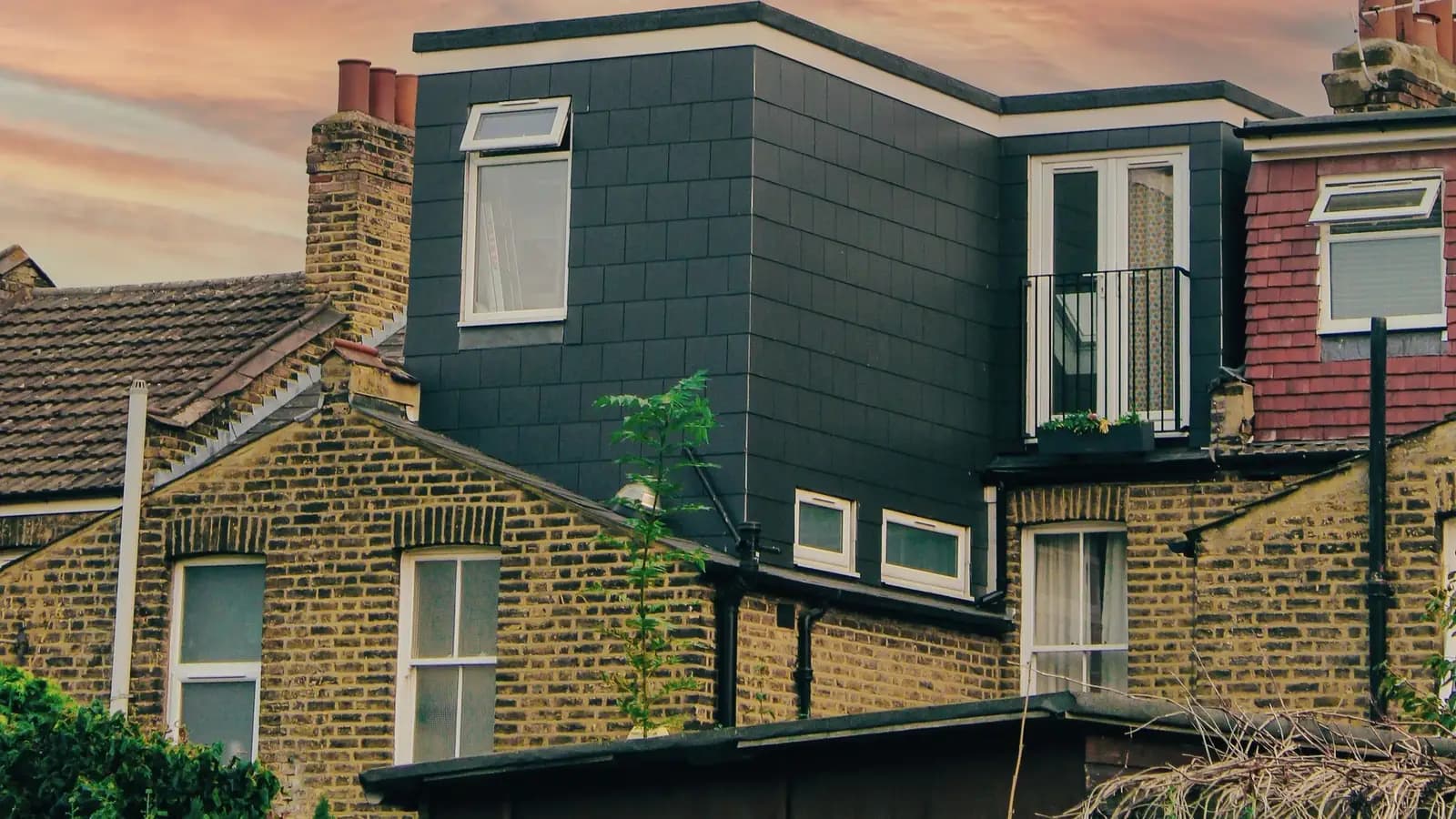
No. Work within the General Permitted Development Order 2015, such as a single-storey rear extension to 3m on an attached house or 4m on a detached one, or a loft up to 40m³ on a terrace or 50m³ on a semi-detached or detached house, is lawful without a certificate. The certificate adds no right; it records that you had it.
If the permitted development checker says you need nothing, believe it. It is built to give you that answer even though a certificate is from £950 and a planning application is £895.
When is a lawful development certificate worth having in London?
A certificate is worth having in London in three cases: at sale, when a buyer's solicitor asks for proof that an extension was lawful; when a lender asks for the same; and where an Article 4 direction may have removed your permitted development rights and the council's website is unclear, because the council then decides before you spend on building. A house extension or loft conversion within clear limits, outside a conservation area, usually does not need one. A change to a small HMO is different, because Article 4 directions on HMOs are common; see our HMO drawings service.
How much does a lawful development certificate cost in London?
A lawful development certificate costs from £950 at Fixed Fee Plans, in three stages starting at £150, plus the council's separate £274 fee for a proposed use certificate, which is half the equivalent planning fee. We confirm the exact figure in writing before work begins and never bundle the council fee into ours.
A lone measured survey is £150. The fee calculator shows both fees together, and the prices page lists every service.
A worked example: a loft in a London terrace
Say you own a terraced house in a borough with no Article 4 direction on lofts and you want a rear dormer. Class B allows up to 40m³ added to the roof on a terrace, with nothing beyond the front roof plane. The existing drawings fix the roof as it stands. The proposed drawings show the dormer, and the added volume is calculated and written on the sheet. Inside the limit, the case rests on arithmetic.
If an earlier owner already added roof volume, it counts towards the same allowance, which is the usual reason a loft that looked comfortable proves to be over. With the certificate, a later buyer's solicitor has the council's word. The project still needs building regulations drawings, including the protected escape stair that Part B requires for a loft room in a two-storey house.
What the officer needs from the sheets is plain: dimensions that can be checked, the roof form before and after, the position of every window, and the calculation written out. A drawing that makes the officer hunt for a figure invites a request for more information, so we put each figure where the officer will look for it.
Why do lawful development certificates get refused?
Certificates are refused when the work breaks a limit in the General Permitted Development Order 2015: volume or depth exceeded, projection beyond the front roof plane, an Article 4 direction or conservation area, a flat or maisonette, or drawings too vague to measure. Each reason maps to a rule in the Order:
- The volume or depth limit is exceeded once earlier extensions are counted.
- The work projects beyond the front roof plane.
- An Article 4 direction or conservation area has removed or restricted the right.
- The property is a flat or maisonette, which has no householder permitted development.
- The drawings are too vague for the officer to measure the proposal.
Only the last is within our control, which is why the checking comes before the drawing. Our permitted development guide sets out where each limit falls. If the project is outside the Order, a certificate is the wrong tool: the route is a planning application, and the London cost guide shows what it involves.
A certificate also never replaces building control. From 24 March 2027 the Future Homes Standard applies to new dwellings, but every project, permitted development or not, must still meet the Building Regulations.
How much does a lawful development certificate cost in London?
Do I need a certificate of lawfulness for permitted development?
What is the difference between section 191 and section 192?
What happens if the council refuses the certificate?
Is a certificate of lawfulness the same as building regulations approval?
Start with £150
Your fixed fee is already on this page.
Tell us the postcode and what you want to build. We confirm the fee in writing and book the survey.