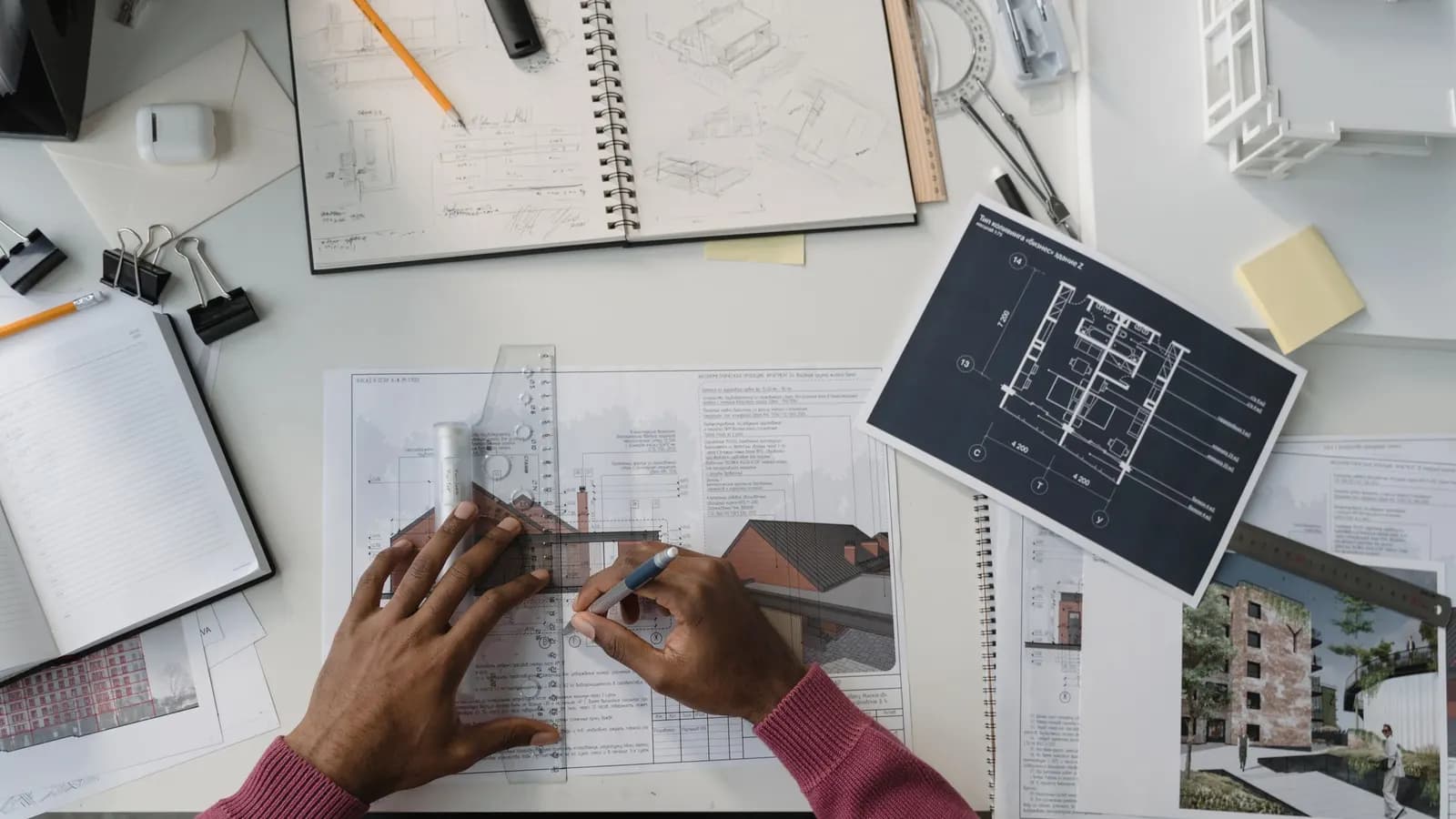
Amending an approved scheme costs from £285 at Fixed Fee Plans, for drawings we prepared, and the council charges £46 for a non-material change to a householder permission, or £309 in any other case. The fee covers the revised drawings and a covering statement that sets out the change.
Plans move after approval. A builder finds a drain where the extension was meant to go; a roof lantern is swapped for a flat rooflight; the owner decides the bifold doors should be three panels, not four. You can often build the change only if the council has agreed it in writing first, and the quickest route depends on how large the change is.
Which route fits my change?
There are three, and the lightest route that works usually costs least. A non-material amendment under section 96A asks the council to agree a change it accepts is not material. A minor material amendment, made as a section 73 application, varies a condition such as the list of approved plans, and creates a fresh permission. A fresh application is for a change too big for either.
The planning practice guidance says there is no statutory definition of non-material, because it depends on the scheme: a change that is minor on a large site can be material on a small one. The council must also consider the change together with any earlier changes under the section, so a series of small amendments can add up to something that is no longer non-material. We tell you which route we expect and why, before you pay a council fee.
What does an amendment cost?
Our fee is from £285, and the council's is £46 for a non-material change to a householder permission, or £309 for any other. Varying a condition under section 73 is £89 for a householder permission. Those are the 1 April 2026 figures, paid to the council at submission and never added to ours.
The price is a floor because some changes cost more to draw: moving a staircase changes the plan on every floor, where swapping a window changes one elevation. We quote in writing from your approved drawings before we start. The service is for schemes we drew; if someone else drew yours, send us the plans and we say what we can do.

How long does the approval last, and does an amendment reset it?
A permission in England lapses after three years unless development has begun, section 91 of the Town and Country Planning Act 1990. A non-material amendment does not extend that time, because it changes the existing permission and does not grant a new one. A section 73 variation, on the other hand, results in a new permission, with its own conditions, so the decision notice needs careful reading.
Notice also what the amendment route cannot do. It cannot be used for listed building consents, which are a different regime, so a change to a listed building needs its own application and often a heritage statement. And because a non-material amendment is not an application for planning permission, councils have discretion over whether to tell neighbours, so the process is lighter than for a new application.
When is an amendment the wrong answer?
When the change alters what neighbours will see in a way a reasonable person would call significant: a taller roof, a deeper rear wall, a new side window facing a boundary. The council will not treat that as non-material, and asking costs you a fee and time. We say so plainly, then draw the revised scheme for a full application.
Amendments are also the wrong tool for conditions that still need to be met. If your decision notice asks for brick samples before work starts, an amendment will not clear it; our discharge of conditions service does. And if the council has already refused the change, a householder appeal is the route back. To see whether a smaller version of the change needs any application at all, use the permitted development checker.
Frequently asked questions
What counts as a non-material amendment?
There is no statutory definition. The council decides whether the change, with any earlier changes, is not material to the permission as originally granted. Small shifts to window positions, materials or levels are often accepted, but the council has the final word.
How much does it cost to amend planning permission?
Our fee is from £285. The council's fee is £46 for a non-material change to a householder permission and £309 in any other case, paid to the council.
Can I start building while the amendment is pending?
Only to the extent the original permission covers it. Building something different from the approved plans before the council agrees the change leaves that part without permission. Wait for the written decision.
Does an amendment work for a listed building?
No. The non-material amendment procedure cannot be used for listed building consents, per the planning practice guidance. A listed building needs its own application.