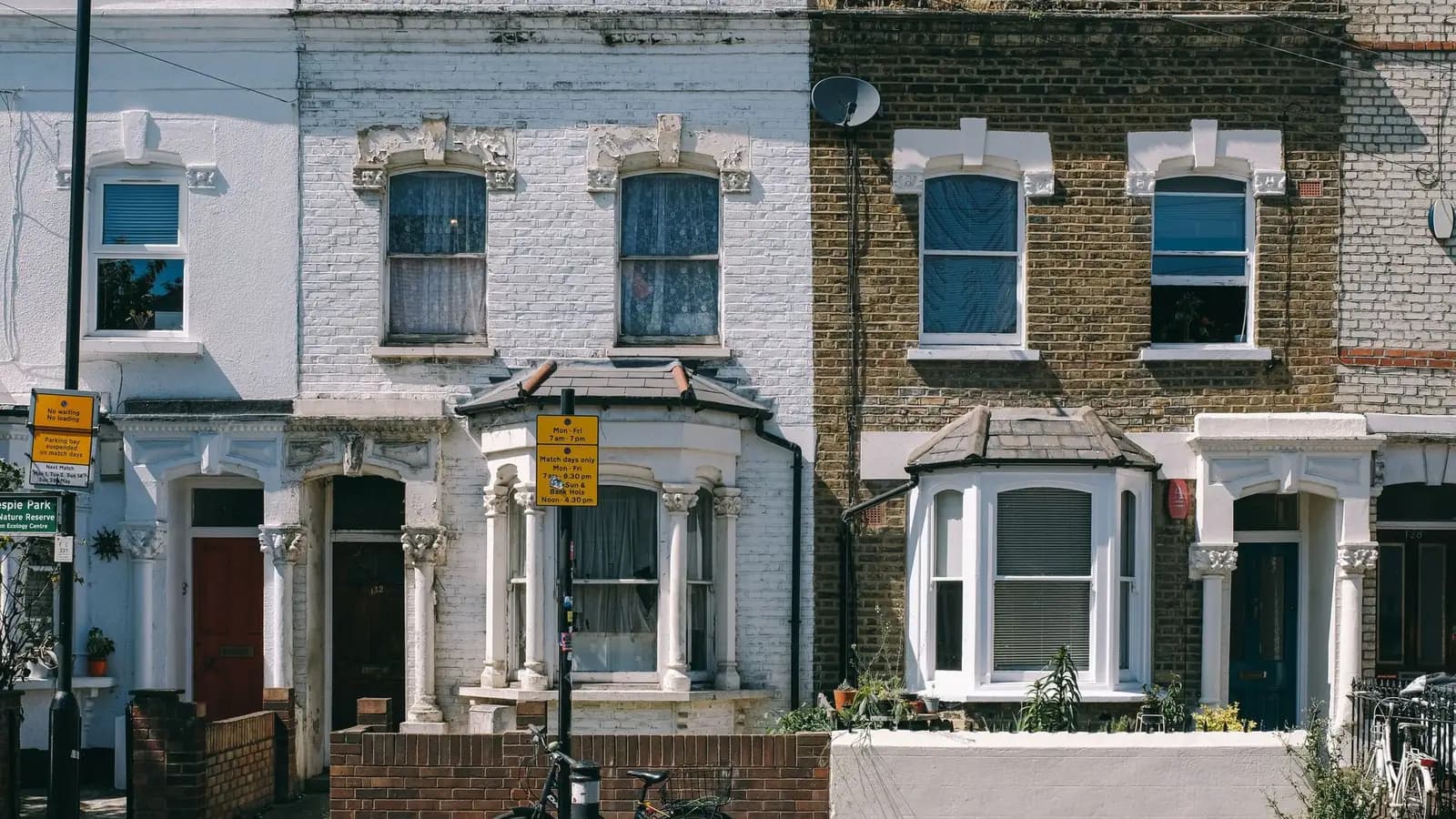
The Party Wall etc. Act 1996 requires a building owner to serve written notice on the neighbour before certain work. Work to an existing party wall under section 2 needs two months' notice; a new boundary wall under section 1 and deep excavation under section 6 need one month. The neighbour has 14 days to respond.
The Act sits alongside planning permission and building regulations and replaces neither. GOV.UK states plainly that the Act is separate from planning and building regulations control, so a planning approval does not excuse you from serving notice.
Key Takeaways
- Section 1 covers a new wall on the boundary, section 2 works to an existing party structure, and section 6 excavation near a neighbour's foundations.
- Notice is two months for section 2 and one month for sections 1 and 6.
- If a neighbour does not consent in writing within 14 days, they are treated as dissenting and a dispute arises.
- A dispute is settled by one agreed surveyor or by two surveyors, and recorded in an award.
- Under section 11, the building owner pays for the work, with named exceptions.
What does the Party Wall etc. Act 1996 cover?
The Act covers work to walls and structures shared between neighbouring properties, building on the boundary, and excavation near a neighbour's foundations. It gives the person doing the work, the building owner, rights over the shared structure, and gives the neighbour, the adjoining owner, protections and a way to object.
Section 20 defines the terms. A party wall is a wall forming part of a building that stands on land of different owners, or the part of a free-standing wall that separates buildings of different owners.
The "owner" is wider than the freeholder. It includes anyone receiving, or entitled to receive, rents or profits from the land, and in some cases a person in possession of it. The booklet says notice must be in writing, and section 15 allows hand delivery, post, or email where the recipient has said they accept it.
What is a section 1 notice?
A section 1 notice is served when you intend to build a new wall on the line of junction between two properties. It must be served at least one month before work starts, say you wish to build, and describe the wall. The neighbour then decides whether to consent.
Under section 1 the neighbour has 14 days to give consent by notice. Without it, you may build only at your own expense and wholly on your own land, and you must compensate anyone damaged by it. Projecting footings and foundations may be placed within a twelve-month window that opens one month after the notice is served.
What does section 2 let you do to a party wall?
Section 2 lets a building owner underpin, thicken, raise, cut into or rebuild a party structure. It requires a party structure notice at least two months before work, and the owner must generally make good any damage to the neighbour's premises.
Section 2(2) also covers cutting into the wall for any purpose, including a damp proof course, cutting away footings and chimney breasts, and exposing a previously enclosed wall, provided it is adequately weathered afterwards.
A steel beam bearing into a shared wall falls within the right to cut into it, so it needs a section 2 notice. If you are removing a wall or adding a loft, see our guide on when Part A calculations are needed and the loft permitted development guide.
For several of these rights, section 2(3) to 2(5) require making good damage, including to internal furnishings and decorations. The notice, under section 3, must carry your name and address, the particulars of the work and the start date, and it lapses if work has not begun within twelve months.
When does section 6 apply to excavation?
Section 6 applies when you excavate within three metres of a neighbouring building and go deeper than the bottom of its foundations, or within six metres where the work meets a 45 degree line drawn down from the neighbour's foundations. You must give one month's notice, with plans and sections showing the site and depth of the excavation.
The tests are in section 6: three metres measured horizontally with the work going lower than the neighbour's foundations, or six metres where it meets a plane at 45 degrees from their foundation level.
A basement or deep foundation near the boundary is the typical case. If the neighbour requires it, the building owner must underpin, strengthen or safeguard their foundations at the building owner's expense. The notice must state whether you propose to do so. A notice lapses if work has not started within twelve months and is not carried out with due diligence.
What are the notice periods and what does the 14-day response mean?
Notice must be served at least two months before section 2 work and one month before section 1 or section 6 work. The neighbour then has 14 days to consent in writing. If they do not, they are treated as having dissented and a dispute is deemed to have arisen, which sends the matter to surveyors.
| Section | Work | Notice before starting | Neighbour's response |
|---|---|---|---|
| 1 | New wall on the line of junction | At least one month | Consent within 14 days |
| 2 | Work to an existing party structure | At least two months | 14 days to consent; counter notice within one month |
| 6 | Excavation near foundations | At least one month | Consent within 14 days |
The 14 days come from section 5 for party structure and counter notices, and from sections 1 and 6 for the others. Silence counts as dissent, so a neighbour who simply does not reply has not agreed. The adjoining owner can also serve a counter notice under section 4 within one month, asking for reasonably needed extras such as chimney works.
Should you use an agreed surveyor or two surveyors?
An agreed surveyor is one surveyor appointed by both owners to settle the dispute for both. The alternative is for each owner to appoint their own surveyor, with the two choosing a third to settle any difference. Either way the surveyor must be impartial, and an owner cannot act as their own surveyor.
Section 10 provides both routes. An agreed surveyor suits straightforward work where both owners are content with one adviser; two surveyors suit a neighbour who wants their own. The booklet says surveyors "must consider the interests and rights of both owners and draw up an award impartially", so the second surveyor is not the neighbour's champion.
Delay has a remedy built in. If a party fails to appoint a surveyor within ten days of a request, the other party may appoint one on their behalf, and if a surveyor neglects to act effectively for ten days, the other can proceed alone. The surveyor chosen should not already be engaged to supervise the building work.
What does a party wall award cover?
An award is the surveyors' written decision on the right to carry out the work, the time and manner of doing it, and any other matter arising out of the dispute, including the costs of making the award. It is final unless appealed to the county court within 14 days of service.
That follows section 10(12) and (17). The booklet adds that an award often records the condition of the neighbour's property beforehand, as a schedule of condition, and specifies protective work. Under section 7 you must not cause unnecessary inconvenience and must compensate loss or damage caused by the work.
Who pays under the Party Wall Act?
The building owner pays for the work, under section 11(1), "except as provided under this section". The surveyors decide who bears the costs of the award, and the explanatory booklet says the building owner will usually pay all costs of drawing it up, including the adjoining owner's surveyor, where the work is for their own benefit.
The exceptions are in section 11. Where work cures a defect, costs are shared according to each owner's use of the wall and responsibility for the defect. A neighbour who asks for extra work pays for it, and one who later uses work you paid for in full pays a due proportion of the original cost.
Our fees are separate from those costs. Fixed Fee Plans party wall packages are from £695, covering notices, awards and schedules of condition. If you want to serve notices yourself, correctly drafted notices alone are £49. Any adjoining owner's surveyor costs are set by the award, not by us.
Frequently asked questions
Do I need a party wall notice if I have planning permission?
Yes. The Act is separate from planning and building regulations, so approval of one does not replace the other.
Can my neighbour stop my extension under the Act?
Refusing consent does not stop the work by itself. It starts a dispute that surveyors settle, and their award decides the right to carry out the work and the time and manner of doing it.
Sources
All retrieved 10 October 2026.
- Party Wall etc. Act 1996, sections 1 (new building on line of junction) and 2 (repair etc. of party wall): https://www.legislation.gov.uk/ukpga/1996/40/section/1 and https://www.legislation.gov.uk/ukpga/1996/40/section/2
- Party Wall etc. Act 1996, sections 3, 4 and 5 (party structure notices, counter notices, disputes): https://www.legislation.gov.uk/ukpga/1996/40/section/3, https://www.legislation.gov.uk/ukpga/1996/40/section/4 and https://www.legislation.gov.uk/ukpga/1996/40/section/5
- Party Wall etc. Act 1996, sections 6 (adjacent excavation) and 7 (compensation): https://www.legislation.gov.uk/ukpga/1996/40/section/6 and https://www.legislation.gov.uk/ukpga/1996/40/section/7
- Party Wall etc. Act 1996, sections 10 (resolution of disputes) and 11 (expenses): https://www.legislation.gov.uk/ukpga/1996/40/section/10 and https://www.legislation.gov.uk/ukpga/1996/40/section/11
- Party Wall etc. Act 1996, sections 15 (service of notices) and 20 (interpretation): https://www.legislation.gov.uk/ukpga/1996/40/section/15 and https://www.legislation.gov.uk/ukpga/1996/40/section/20
- GOV.UK, The Party Wall etc. Act 1996: explanatory booklet (sections 8, 9, 12 to 15, 17 and 57 of the booklet): https://www.gov.uk/government/publications/preventing-and-resolving-disputes-in-relation-to-party-walls/the-party-wall-etc-act-1996-explanatory-booklet
- GOV.UK, Preventing and resolving disputes in relation to party walls: https://www.gov.uk/guidance/party-wall-etc-act-1996-guidance